

Hawaiʻi ʻAmakihi, pronounced “ah-mah-kee-hee”
Chlorodrepanis viren
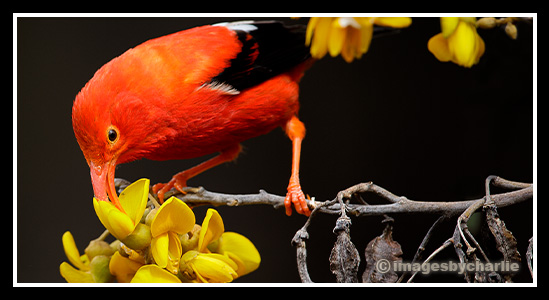
The ʻamakihi is a Hawaiian honeycreeper forest bird. Like the ʻiʻiwi, they feed on nectar from māmane and ‘ōhiʻa flowers. Both the ʻamakihi and māmane, pictured above, are endemic to Hawaii. The Hawaiʻi ʻamakihi is found on the Big Island, Maui and Molokaʻi. They were last seen on Lanaʻi in 1976.
Until 1995, the Hawaiʻi, Oʻahu (C. flava) and Kauaʻi (C. stejnegeri) ʻamakihis were believed to be the same species. Based on genetic studies, they are now classified as three separate species.
Feathers of the Hawaiʻi ʻamakihi are yellow-green to olive with males sporting brighter colors and darker lores than females. A lore is the region between the eye and bill. Their bill is decurved which distinguishes them from the ʻalauahio.
The Hawaiʻi ʻamakihi is believed to have developed some resistance to avian malaria.
 ImagesByCharlie